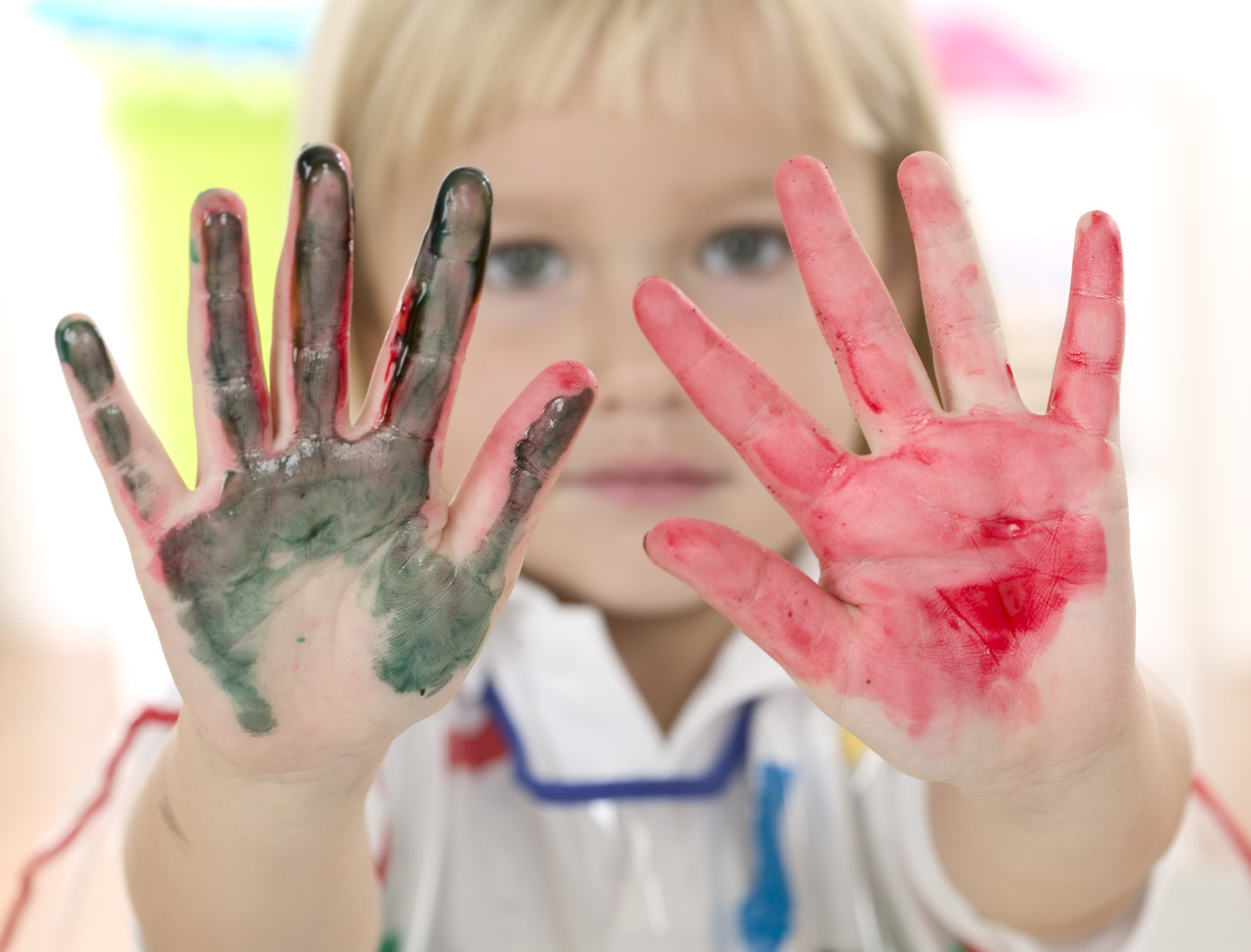
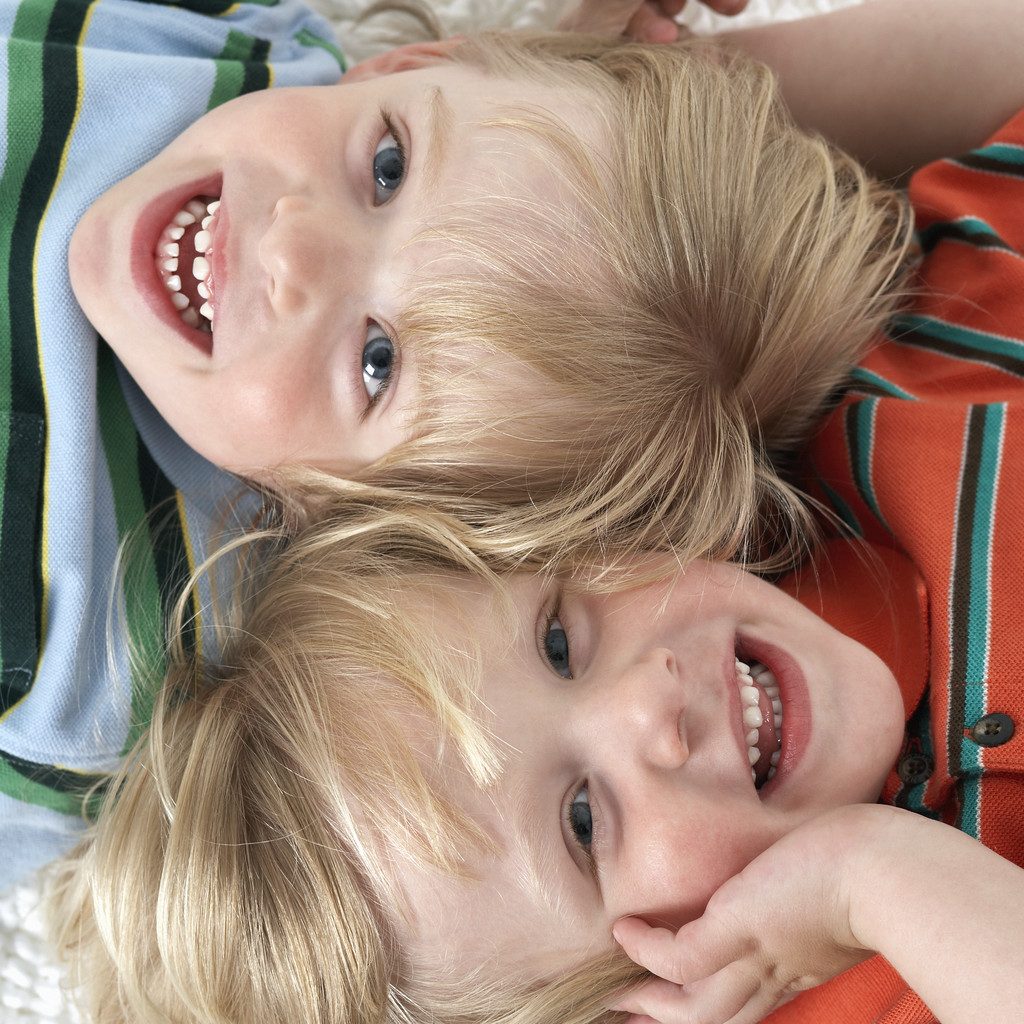
As is often the case, I have more questions than answers on the topic of social emotional needs of children with an exceptionality. I could learn and write about this topic for the rest of the year and still only glaze the surface. I want to make the effort to bring it up because it is so important. It is important to the child with the need just as it is to the children who are interacting ( or as is often the case, not interacting) with the child. It fits in with the topic of diversity because part of diversity is helping children learn about and accept others. If children can be accepting of children with an exceptionality, it will be easy to transfer those skills to people who speak another language, look different, or have different customs.
I used to think that preschoolers were pretty accepting and they often are, but not always. As time goes on they can loose interest in the child whose speech is not understandable, or decide not to play with the child whose hyperactivity disrupts their play. I've seen children, who otherwise have exceptional social skills refuse to hold the hand of a child who has a slight deformity. Is it because of the deformity, because the child's lack of speech skills or the behavior of the child in class? Probably a little of each. And the action of other children affects the way the child with the special need feels about him or herself.
Social emotional assistance should always be considered when we are determining the needs of a young child with a a special need. It is important to find ways for the child with articulation difficulties to communicate with others. So often teachers are told to teach children to use their words when there is a conflict, but when a child is physically unable to do this, the advise often sounds something like this, "It will get better when the child's speech catches up." That cannot be an acceptable answer. We've got to find a way to make an effort to teach the group sign language, use picture cards or whatever is necessary to help that child be a part of the group. Leann taught us at the Governor's Institute to use social stories and I think that is a valuable start. There are a number of websites which can give you more information on using social stories with children but I think the following is one of the best: http://www.vanderbilt.edu/csefel/practicalstrategies.html
Marisa Macy, assistant professor of special education, at Penn State suggests teachers use the strategy of embedding social-emotional instruction throughout the day. If you would like to learn more about her work, you can go to: http://www.ed.psu.edu/educ/news/news-items-folder/embedding
Here are a few books which may help your class be more accepting of differences in others:
Zoom! by Robert Munsch
Susan Laughs Jeanne Willis
Leo the Late Bloomer Robert Kraus
Friends at School by Rochelle Bunnett
We Can Do It, by Laura Dwight
My Friend Isabelle (Hardcover) by Eliza Woloson
As I said when I started, I have a lot more questions than answers. Please share your thoughts and help me and others help all the children in our lives increase their social emotional skills.

Wednesday, January 28, 2009


Saturday, January 17, 2009
Gun Play-Looking for Answers
I am struggling with what to do about gun play in my classroom. I know the standard answers are, "We don't play with guns, in our school." or "Guns are not toys." I think the issue is a bit more complex. It could be that my vision is clouded by the fact that as a young girl, I pretended to be Annie Oakley, a sharp shooter in the Wild West Show. No one, who knows me now, would suspect I used to wear a holster with two guns and a cowboy hat. Times have changed, but children still have an interest in pretending with guns.
Right now the gun play in my class is not all "bad guy" play. It is related to family members being in the military and families in which adults hunt for food. When a child has a parent serving in the Army, he often wants to role model that parent. I allow other children to role model their parents, but am I to say to this child that he cannot? As a country, we recognize and praise those who are serving in the military, but children in the classroom are told it is not ok to play soldier. This sends a very conflicting message. I allow other negative topics such as house fires and doctors who have patients that die, but not gun play. Am I giving more power to the gun play because of my stance?
I feel that teaching the children that soldiers do much more than shoot guns is part of the solution, but that is not enough. I'm "thinking out loud" as I write this, but maybe it would be positive to have a class meeting on the topic of guns and soldiers. I sometimes avoid these topics, wishing not to worry children who have not been exposed to such topics. How silly of me, when several of the boys are spending as much time as possible figuring out how to get away with gun play. "It is just a bubble machine gun." "It's not a gun, just a water shooter." It could be that recognizing the child and his dad's job might be the best way to handle the situation. We could talk about our respect for those serving in the military, but at the same time point out that none of the children in the room are enemies. Some children might express their feelings and as a group we might be able to work through these things. The child who wants to emulate his dad would feel proud and and yet at the same time he could hear why others ( the teachers) did not want gun play in the room. We could talk about the end of goal of soldiers is to bring peace. It might not solve the problem, but it could give me insight into what he and the other children are feeling. It could be a starting place.
Please share your thoughts on this topic. I need all the wisdom you have to offer!
Right now the gun play in my class is not all "bad guy" play. It is related to family members being in the military and families in which adults hunt for food. When a child has a parent serving in the Army, he often wants to role model that parent. I allow other children to role model their parents, but am I to say to this child that he cannot? As a country, we recognize and praise those who are serving in the military, but children in the classroom are told it is not ok to play soldier. This sends a very conflicting message. I allow other negative topics such as house fires and doctors who have patients that die, but not gun play. Am I giving more power to the gun play because of my stance?
I feel that teaching the children that soldiers do much more than shoot guns is part of the solution, but that is not enough. I'm "thinking out loud" as I write this, but maybe it would be positive to have a class meeting on the topic of guns and soldiers. I sometimes avoid these topics, wishing not to worry children who have not been exposed to such topics. How silly of me, when several of the boys are spending as much time as possible figuring out how to get away with gun play. "It is just a bubble machine gun." "It's not a gun, just a water shooter." It could be that recognizing the child and his dad's job might be the best way to handle the situation. We could talk about our respect for those serving in the military, but at the same time point out that none of the children in the room are enemies. Some children might express their feelings and as a group we might be able to work through these things. The child who wants to emulate his dad would feel proud and and yet at the same time he could hear why others ( the teachers) did not want gun play in the room. We could talk about the end of goal of soldiers is to bring peace. It might not solve the problem, but it could give me insight into what he and the other children are feeling. It could be a starting place.
Please share your thoughts on this topic. I need all the wisdom you have to offer!
Saturday, January 10, 2009
Appreciating Differences-Non-Fiction Books
Probably my favorite non-fiction book, for helping children learn about other, is Children Just Like Me by Anabel Kindersley and Barnabas Kindersley. The authors traveled around the world learning about children and then putting bits and pieces of their life in the book. This isn’t a book you would read all in one day, but you could take a month and meet a new child each day. Children will see photos of other children their age and learn about their families, what they like to eat, their school and their pets. There is no stereotyping as there is in so many books, just real children from all kinds of families and backgrounds. Children can then make drawings of themselves and what they like. Display these in the room, so they can discover similarities and differences within their own class.
I also like the Around the World series of books, most by Ann Morris and Ken Heyman. They include Bread, Bread, Bread, Houses and Homes, Shoes, Shoes, Shoes, Play, Families, Tools, On the Go, and Loving. These simple books show clear photos and are appropriate for the youngest preschoolers. After reading one of these, the children can share info about themselves. With the book Bread, Bread, Bread, it would be good to have various breads available for the children to try. Part of social emotional growth is being open to trying new things.
I also like the Around the World series of books, most by Ann Morris and Ken Heyman. They include Bread, Bread, Bread, Houses and Homes, Shoes, Shoes, Shoes, Play, Families, Tools, On the Go, and Loving. These simple books show clear photos and are appropriate for the youngest preschoolers. After reading one of these, the children can share info about themselves. With the book Bread, Bread, Bread, it would be good to have various breads available for the children to try. Part of social emotional growth is being open to trying new things.
Appreciating Differences
As children grow, they begin to notice that not everyone is just like themselves. It is important to help them to learn about others. I will start the month with 2 fiction books which help with the topic and then add some nonfiction which are also appropriate for young children.
The Jellybeans and the Big Dance by Laura Numeroff and Nate Evans, illustrated by Lynn Munsinger (2007) is a great story to help children appreciate the differences in others and build a sense of community. The main character, Emily, is disappointed to find that the other girls in her new dance class are very different from what she expected. In the end though, it is the differences which makes for a happy ending. After reading and discussing this book, plan a project in which the children can share their talents. You might plan a special day, a show or make a class garden. No matter what you do, make sure the children each contribute their special abilities. If you want a simpler project ask children to bring ingredients for a recipe such as bread or cookies. Discuss how all the ingredients work together to make a delicious treat. Another simple activity would be to talk about how each child contributes to the classroom or how family members contribute to the family. Thank you to Bernice for recommending the book. If you have a good story to build social emotional skills, please share it with us.
Elmer by David McKee. Elmer is a brightly colored elephant who wishes to plain gray, just like the others elephants. The story shows Elmer’s effort to fit in, but in the end, he realizes the elephants like him just the way he is. After reading this story, I usually give the children a large elephant ( sometimes finger paint paper, other times construction paper) to decorate or paint. Each child is encouraged to use his own ideas to create an elephant, but children could also work together on one elephant. We then admire all the elephants and appreciate them and their creators. This is a great way to teach about differences and also build a sense of community.
Monday, December 29, 2008
Happy Birthday!
My grandson's birthday reminded me how important it is to included books as we celebrate important milestones in a child's life. While we think of birthdays as a fun time, there can be lots of stress for children- not getting what they want, sharing their toys, and just the excitement of the day. If you want to help your child/children understand the celebration or just want a book to help celebrate try some of these:
Froggie Bakes a Cake by Jonathan Lumber - Froggie and his dad plan a celebration of mom's birthday.
It's My Birthday by Pat Hutchins -The main charachter in this story doesn't want to share.
Happy Birthday, Jamela! by Niki Daly- Jamela is disappointed with the shoes she gets for her birthday.
Happy Birthday, Dear Duck by Eve Bunting with illustrations by Jan Brett. The desert animals plan a special birthday for Duck.
Birthday Monsters by Sandra Boynton is a a fun book that both you and your child will enjoy.
Birthday Bugs by David Carter is another just for fun birthday book.
For older preschoolers:
Some Birthday! by Patricia Polacco. In Some Birthday!, the little girl thinks everyone has forgotten her birthday, but is treated to a special party in the end.
Happy Birthday to You, You Belong in a Zoo by Diane DeGroat- Gilbert is invited to a party, but decides to give a frying pan for a present.
Froggie Bakes a Cake by Jonathan Lumber - Froggie and his dad plan a celebration of mom's birthday.
It's My Birthday by Pat Hutchins -The main charachter in this story doesn't want to share.
Happy Birthday, Jamela! by Niki Daly- Jamela is disappointed with the shoes she gets for her birthday.
Happy Birthday, Dear Duck by Eve Bunting with illustrations by Jan Brett. The desert animals plan a special birthday for Duck.
Birthday Monsters by Sandra Boynton is a a fun book that both you and your child will enjoy.
Birthday Bugs by David Carter is another just for fun birthday book.
For older preschoolers:
Some Birthday! by Patricia Polacco. In Some Birthday!, the little girl thinks everyone has forgotten her birthday, but is treated to a special party in the end.
Happy Birthday to You, You Belong in a Zoo by Diane DeGroat- Gilbert is invited to a party, but decides to give a frying pan for a present.
Sunday, December 14, 2008
Holidays and Books
It is that time of the year, when the one thing on mind of many children is the holidays. Sometimes it is hard to get them to refocus on learning. In my class we talk about all kinds of celebrations- not just the winter holidays. We start out by discussing the celebrations the children already know about and then I tell them about a few others. This year one of the children is expecting a new sibling soon, so that we be part of our discussion. I try to look for books that talk about giving, rather than getting. While most of them are older books, I think they still have a social emotional value and can be tied into the holidays.
The Mitten Tree by Candance Christiansen and illustrated by Elaine Greenstein is the story of a elderly lady who wishes the children would take time to visit. She notices that one of them has no mittens and so she makes him a pair and hangs them on a nearby tree. Over time she makes more and more mittens for the children. The story is lends itself to the topic of lonely older people or to helping those less fortunate. After reading this story you might have the children make gifts for people at a local retirement home or you could create a tree to collect mittens for those who don't have any.
Mr. Rabbit and the Lovely Present by Charlotte Zolotow and illustrated by Maurice Sendak is the story of a little girl looking for a present for her mother. I usually read this story then ask the children to think about someone they love and would like to give a present. At times, I have simply had the children draw or cut out a picture of the item, but recently I have been setting up a store in which the children may shop for others. I think it is so important for us to encourage children to look outside themselves. My store has items which others donate to me. Nothing with a lot of value, but the children have a great time, selecting, purchasing ( with play money I provide), wrapping, often hiding, and finally giving the gift. The activity teaches math skills, literacy skills, builds self esteem, fine motor skills, and encourages children to follow through on the multi-step task. We have the store open for at least a full week, so the children really begin to understand what we are doing.
Children continue to love the story of The Little Engine That Could. There are many versions, but they all encourage children to keep trying. Have children think of something they couldn't do, but now can. Ask them to draw a picture of it and hang them on a bulletin board with the title, We Thought We Could and We Did It. You might even put each picture in the car of a train.
A favorite Christmas story of mine is Mr. Willowby's Christmas Tree by Robert Barry. While I read the old version, I'm pretty sure there is a more modern one out now. Mr. Willowby gets his tree, but it is too big, so he cuts off the top and throws it out. The top is found by another, but it is too big and the top is cut off and thrown out. The story continues in this pattern. Children enjoy seeing that all creatures who have a tree from the top of the one large tree. I like to do a math related activity about sequencing of size after this story, but it also provides a time for us to talk about the different ways people celebrate.
Other books about celebrations, which you might not be as familiar, include Parade by Donald Crews, The Dress I'll Wear to the Party by Shirley Neitzel, Light the Candle, Bang the Drum by Ann Morris. I often include books about music, since that is a part of many celebrations.
Have fun with the children this holiday season!
The Mitten Tree by Candance Christiansen and illustrated by Elaine Greenstein is the story of a elderly lady who wishes the children would take time to visit. She notices that one of them has no mittens and so she makes him a pair and hangs them on a nearby tree. Over time she makes more and more mittens for the children. The story is lends itself to the topic of lonely older people or to helping those less fortunate. After reading this story you might have the children make gifts for people at a local retirement home or you could create a tree to collect mittens for those who don't have any.
Mr. Rabbit and the Lovely Present by Charlotte Zolotow and illustrated by Maurice Sendak is the story of a little girl looking for a present for her mother. I usually read this story then ask the children to think about someone they love and would like to give a present. At times, I have simply had the children draw or cut out a picture of the item, but recently I have been setting up a store in which the children may shop for others. I think it is so important for us to encourage children to look outside themselves. My store has items which others donate to me. Nothing with a lot of value, but the children have a great time, selecting, purchasing ( with play money I provide), wrapping, often hiding, and finally giving the gift. The activity teaches math skills, literacy skills, builds self esteem, fine motor skills, and encourages children to follow through on the multi-step task. We have the store open for at least a full week, so the children really begin to understand what we are doing.
Children continue to love the story of The Little Engine That Could. There are many versions, but they all encourage children to keep trying. Have children think of something they couldn't do, but now can. Ask them to draw a picture of it and hang them on a bulletin board with the title, We Thought We Could and We Did It. You might even put each picture in the car of a train.
A favorite Christmas story of mine is Mr. Willowby's Christmas Tree by Robert Barry. While I read the old version, I'm pretty sure there is a more modern one out now. Mr. Willowby gets his tree, but it is too big, so he cuts off the top and throws it out. The top is found by another, but it is too big and the top is cut off and thrown out. The story continues in this pattern. Children enjoy seeing that all creatures who have a tree from the top of the one large tree. I like to do a math related activity about sequencing of size after this story, but it also provides a time for us to talk about the different ways people celebrate.
Other books about celebrations, which you might not be as familiar, include Parade by Donald Crews, The Dress I'll Wear to the Party by Shirley Neitzel, Light the Candle, Bang the Drum by Ann Morris. I often include books about music, since that is a part of many celebrations.
Have fun with the children this holiday season!
Saturday, December 13, 2008
We Want You for Our American Album!
Our American Album book discussion tote project, funded primarily by a grant from the Institute for Museum and Library Services, is progressing. 1 tote, Out of the Dust by Karen Hesse is already in circulation. 19 more are in processing. Each tote contains 10 copies of a book, a discussion guide, and either an audiovisual version of the book or a magnifying glass for readers with visual disabilities. We have many more titles to get ready for the circuation.

The second phase of this project is recruit teens to videorecord the personal stories of local residents about events in history and their own lives.
If you know a person with stories to tell or if you are a teen who would like to be a videographer, please contact me at bdcrouse@fclspa.org. We need you. Our goal is to complete most of the project by early May.
Subscribe to:
Posts (Atom)